%20(1).svg)
SBA 7(a) loans that help you build, buy, or expand
Getting your SBA 7(a) loan shouldn’t be confusing, slow or full of red tape.

It's easy to get started.
Fill Out The Form
Tell us a bit about your business and your goals using our form. It only takes 3 minutes.
Talk To Your Specialist
One of our experienced SBA (a) specialists will reach out to learn more about your plans and walk you through your financing options.
Apply with Confidence
If it’s a good fit, we’ll help you gather the necessary documents and put together a complete SBA loan package to move your project forward.
SBA 7(a) Funding options that fit the way you do business.
Whether you’re buying, building, or growing, we have financing options for almost every situation. At First Bank of the Lake, we specialize in helping small business owners get the funding they need. Whether you’re just getting started or ready to take things to the next level, we make business lending simple and approachable.

Open or Expand a Franchise

Purchase an Existing Business

Pay for Day-to-Day Business Needs
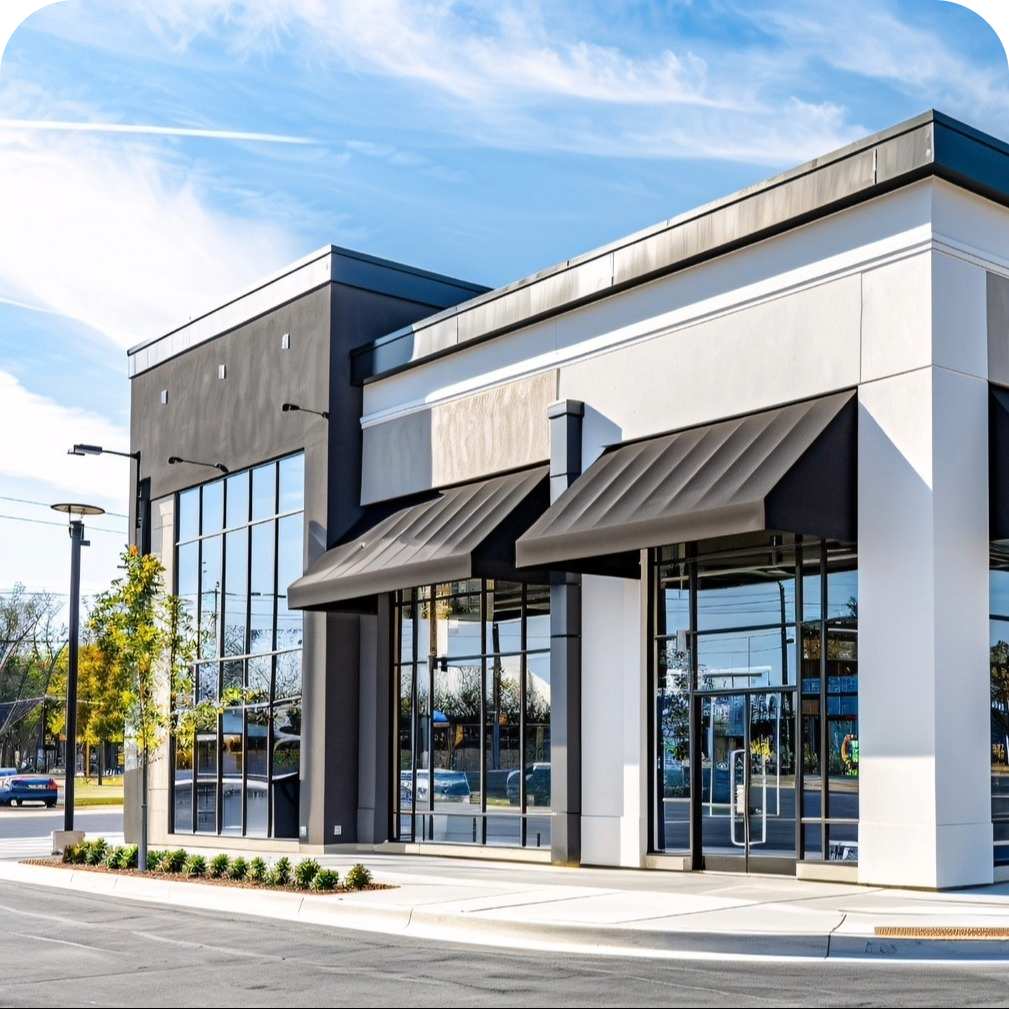
Buy the Building You're Renting

Let's see if we're a good fit.
If you're considering an SBA 7(a) loan through First Bank of the Lake, here are the common minimum requirements we’ll look at during the application process.
You Meet SBA Eligibility
Most small businesses qualify! We’ll confirm that your business operates in the U.S. and meets the SBA’s basic size and industry guidelines.
Ready to Invest in Your Own Success
Many SBA loans require an equity injection of 10%. This can come from your own funds, franchise fees or, seller financing and more.
A Personal Credit Score over 680
A healthy credit score shows lenders that you manage your finances responsibly — a great sign your business is ready to borrow with confidence.
A Solid Business Background
We look for experience, steady financials, or proven management skills—anything that shows you’re ready to lead your business with confidence.
Real business owners. Real results.
See how First Bank of the Lake helped turn their business dreams into reality.
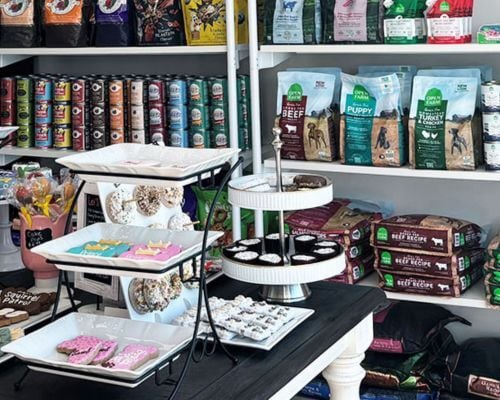
Woof Gang Bakery
After years in HR, Kasia followed her passion for animals and, with a $345K SBA loan from First Bank of the Lake, quickly launched her Woof Gang Bakery & Grooming franchise — already nearing breakeven just months in.
Read More
Tint World
After losing his wife, a friend, and his life savings, Dan Billings reinvented his life with a Tint World franchise — and with guidance and an SBA loan from First Bank of the Lake, his business is thriving and he’s already eyeing a second location.
Read More
Lifetime Green Coatings
Father and son duo Barry and Parker Norfleet launched six Lifetime Green Coatings franchises with a $400K SBA loan from First Bank of the Lake — quickly setting up operations and nearly breaking even within just three months.
Read More"We were in overtime with one minute left in the game. I was astonished we were able to get my SBA loan done with First Bank of the Lake in so little time."
Isaac and Shannon Reed
Reed’s Moving & Storage
"I don’t think the process with First Bank of the Lake could have been better, smoother, or quicker."
Barry and Parker Norfleet
Lifetime Green Coatings
"It happened so fast with First Bank of the Lake. I met Erik on October 11th; the loan application went to underwriting on October 23rd, and by November 9th, I was approved."
Kasia Anderson
Woof Gang Bakery & Grooming
"First Bank of the Lake was the best banking experience I have ever had, and they would be my first call for my next business loan. I would give them an A+."
Andy
Winter Park Ski Rental
"The process was as easy as it could be, and transparency and reliability were key. The level of service at First Bank of the Lake was just superb. I would give them an ‘A’ on my SBA loan experience."
Tyler Green
Freelite AZ
"My First Bank of the Lake rep was great. Easily the finest banker I’ve dealt with in my life - and one of the best human beings I’ve ever met."
Dan Billings
Tint World
"Everyone told me not to do it and that it would take forever, but that wasn’t my experience at all. It only took three months to close on the $3.6 million loan."
Radojica “Rock” Katnic
Perfect Moving

What makes First Bank of the Lake different?
First Bank of the Lake understands how essential growing businesses are to fueling local economies and that not all businesses qualify for conventional business loans. That’s why we offer government-guaranteed Small Business Administration (SBA) 7a and 504 loans.
$1.9 Billion+
In SBA business funding provided since 2020 — helping entrepreneurs across the country grow and thrive.*
2,000+
SBA loans funded since 2020, supporting business owners at every stage of their journey.
Top 5
SBA franchise lender Recognized nationally for helping franchise owners open and expand with confidence.
350+
Franchise brands financed across a wide range of industries — from food service to fitness and beyond.
$600 Million+
Franchise Loans Invested to help entrepreneurs launch and scale proven franchise businesses.
Top 19
Most active SBA 7(a) Lender nationwide as of July 2025.*
See What Financing Your Business Could Look Like
Use the calculator below to get a rough estimate of potential business financing, then talk with a lending specialist to explore specific options for your situation.
SBA 7(a) Loan Calculator
Estimate your monthly payment
Adjust the loan amount, repayment term, and interest rate.

See if You Pre-Qualify Today.
Tell us a bit about your business goals and we’ll help you find the right path forward.


SBA 7(a) Loans: Frequently Asked Questions
An SBA 7(a) loan is the primary method used by the Small Business Administration (SBA) to provide funding for small businesses in the United States. Unlike SBA 504 loans, it offers greater flexibility in how the funds can be used, covering a wide variety of business purposes such as equipment purchases, real estate acquisition, working capital, and other operating expenses. The SBA does not lend money directly but guarantees a portion of the loan (85% for loans up to $150,000 and 75% for loans over $150,000), which encourages lenders to provide funding.
In contrast, SBA 504 loans are specifically designed for the purchase of large-scale capital assets like real estate and equipment, requiring a Certified Development Corporation (CDC). While 7(a) loans have a maximum of $5 million, 504 loans can go up to $15 million.
SBA 7(a) loans are incredibly versatile and can be used for a broad spectrum of business-related needs. These include acquiring or improving real estate (buildings, unimproved land, renovations, new construction, tenant improvements), purchasing new or used equipment, buying an existing business, expanding current operations, updating technology (software and hardware), refinancing existing business debt, onboarding and training new staff, purchasing fixtures and furnishings, and providing working capital. A significant advantage is the ability to combine multiple funding needs into a single, often lower-cost, lending package.
To qualify for an SBA 7(a) loan, a business must meet several key requirements. It must be located in the United States, meet the SBA's definition of a small business, operate legally, and be a for-profit entity. Crucially, the business must demonstrate the ability to repay the loan and show that funding cannot be obtained on reasonable terms from other lenders. Both the business and its owners must have an acceptable credit history or score.
Certain businesses are ineligible, including not-for-profit organizations, lending companies, most passive businesses, companies deriving more than one-third of their annual gross revenues from legal gambling, businesses engaged in illegal or speculative activities (like oil wildcatting), life insurance companies, those involved in political or lobbying activities, businesses that have previously defaulted on a U.S. government loan, those producing or selling pornography, and businesses using pyramid sales distribution plans. Additionally, tangible net worth (including affiliates) should not exceed $15 million, and average net income (including affiliates) must be under $5 million after federal income taxes for the two fiscal years prior to the application.
Pros of 7(a) Loans:
- Easier to qualify than some traditional loans: The SBA guarantee makes lenders more willing to approve loans, especially for businesses with repayment ability but insufficient collateral.
- Low interest rates: Interest rates are often lower than those available in the commercial lending marketplace.
- Longer repayment terms: Loans offer superior flexibility with repayment terms up to 25 years for real estate and 10 years for other uses.
Cons of 7(a) Loans:
- Equity requirements: If collateral is insufficient, the SBA may require the lender to use available equity in the personal real estate of business owners with 20% or more ownership, as well as any guarantors.
- Requires good credit score: Businesses with past credit difficulties may find it challenging to qualify.
- Approval times can be lengthy: Unless working with an SBA Preferred Lender, approval and disbursement times can be prolonged.
SBA 7(a) loan interest rates are competitive and can be either fixed-rate or variable-rate options. The SBA sets maximum allowable rates, which currently range from Prime plus 3% to Prime plus 6.5%, depending on the loan amount (smaller loans typically have higher rates). Lenders negotiate the specific rate with the borrower, considering current SBA guidelines and the risk associated with the loan.
Key terms include a maximum borrowing amount of $5 million. Repayment terms generally do not exceed 10 years, though real estate loans can extend up to 25 years. A guarantee fee, set by the lender using SBA guidelines, will be assessed. Balloon payments are not allowed, and a personal guarantee from all owners with a stake of more than 20 percent is required. Lenders may charge reasonable fees for packaging and other services but cannot double-charge for the same service, and borrowers are not required to obtain or pay for unwanted services.
There are several types of SBA 7(a) loans to cater to various business needs:
- 7(a) Standard Loans: These are the most common, offering 85% guarantees for loans of $150,000 or less and 75% for loans over $150,000 (up to $5 million). They allow for a wide range of eligible uses.
- 7(a) Small Loans: These are for amounts of $500,000 and under, with the same guarantee percentages as standard 7(a) loans. The requirements may be more streamlined.
- 7(a) Express Loans: These have a maximum loan amount of $500,000 with a 50% SBA guarantee. They may offer revolving lines of credit for up to five years within a 10-year overall duration, and lenders decide on borrower qualification.
Other programs mentioned include the Export Working Capital Program, 7(a) International Loans, and CAPlines. Pilot programs like Community Advantage loans, which assisted businesses in underserved markets, expired in September 2023.
An SBA Preferred Lender, like First Bank of the Lake, is a financial institution that has been thoroughly vetted by the Small Business Administration. They have a proven track record of success and reliability in approving and servicing SBA loans. Due to this demonstrated dependability, the SBA grants Preferred Lenders the authority to make lending decisions on its behalf.
Working with an SBA Preferred Lender offers significant benefits, primarily streamlining the application and approval process. This drastically reduces the time it takes from application submission to the disbursement of funds for approved loans. For example, First Bank of the Lake can approve loans under $150,000 in as little as 7 business days. This expedited process can be crucial for small businesses needing timely access to capital. Preferred Lenders also often provide more guidance and support throughout the entire loan lifecycle.
The process of applying for an SBA 7(a) loan involves several key steps. First, borrowers should find qualified SBA 7(a) lenders. They will then need to submit an application (SBA Form 1919) along with supporting paperwork verifying income, business operations, and other financial aspects. The lender will assess if the borrower meets the minimum SBA 7(a) loan requirements and will work to determine needs and qualifications, setting the interest rate according to SBA guidelines. Once approved, the lender processes funding and disbursement.
To increase the chance of success, borrowers should:
- Gather paperwork in advance: Ensure all company documentation is in order.
- Clean up credit report: A healthy credit score is vital; address any errors or problems.
- Reduce debt-to-income ratio: Paying down existing debt can impress lenders.
- Build a better business plan: A clear, appealing business plan can be a strong asset.
- Update financial statements: Ensure financials are current and accurate.
- Select the right lender: Choose a lender that offers guidance and support, ideally an SBA Preferred Lender for faster processing.
- Monitor the prime rate: As interest rates are based on the prime rate, keeping an eye on fluctuations can help secure better rates.
- Determine down payment size: Have at least 10% of the needed amount, especially for major acquisitions or start-ups.
- Specify fund usage: Clearly detail what the loan funds will be used for.
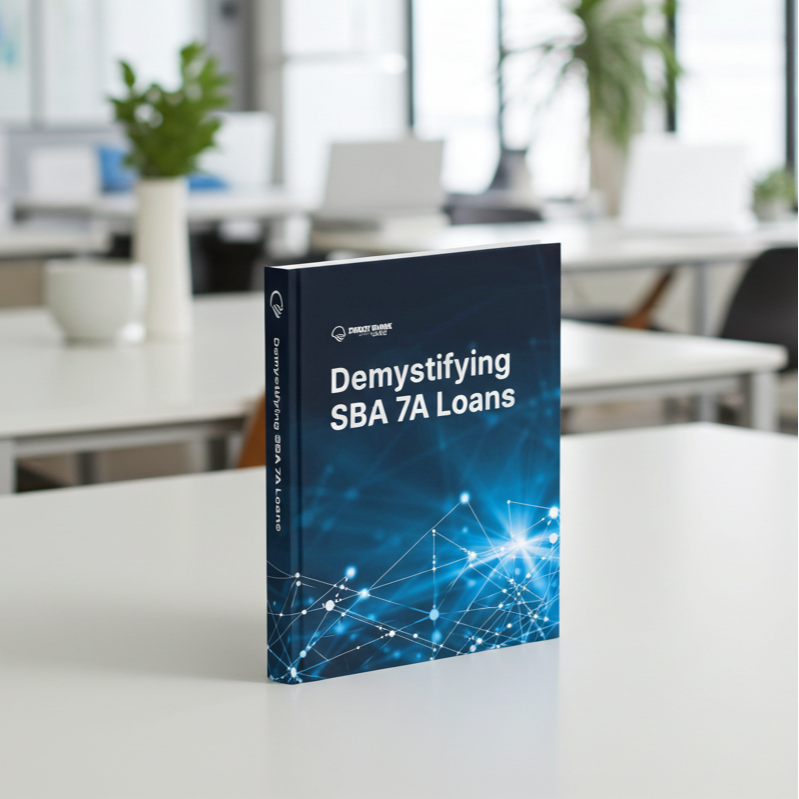
Have more questions? Download our free 35-page guide.
Ready to Talk? We’re Ready to Help.
Tell us a bit about your business — we’ll help you find the right path.
All loans are subject to credit approval. Restrictions and limitations may apply. First Bank of the Lake does not provide tax, legal or investment advice. All decisions concerning these matters should be made in conjunction with your professional advisors.